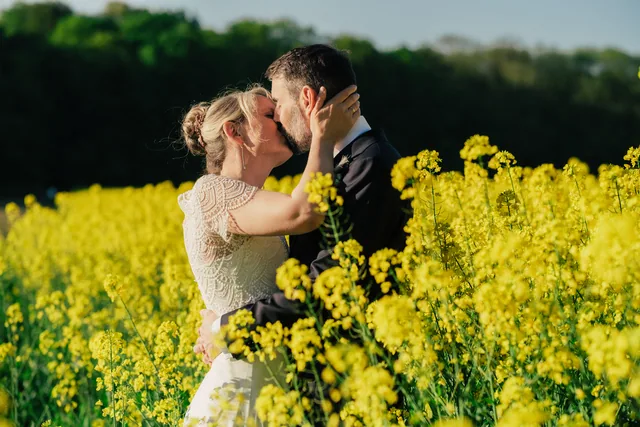
So you want to elope in Europe. You’ve pictured the ridgelines, the sea cliffs, the old stone towns. Then comes the harder question: where do you actually start?
That question fills every planning forum, and most answers are either vague or trying to sell you something. This guide gives you the whole path in one place. You’ll learn how to choose your region, sort the legal side and pick a season. You’ll also get honest numbers and a way to build a day with room to breathe. I’ve spent 15+ years photographing landscapes across 20+ European countries, and that’s where this advice comes from.
First: is eloping right for you?
Before booking flights, it helps to be sure an elopement fits the two of you. An elopement today isn’t running away in secret. It’s a small wedding, often just the couple, built around a place and a pace you choose.
A few signs it suits you. You keep trying to shrink the guest list. You care more about the place than the party. The thought of a hundred people watching you makes your shoulders tense. None of that means you love your people any less. It means you want to be present for your own wedding.
If you’re still working out the basics, start with what an elopement wedding is. If you’re torn between a small day and a bigger one, elopement vs wedding walks through the honest pros and cons. And if you want a few favourite people there, look at micro wedding vs elopement. A handful of guests doesn’t disqualify you.
Already sure? Then this is the step order that keeps planning simple.
Step 1: Choose where in Europe
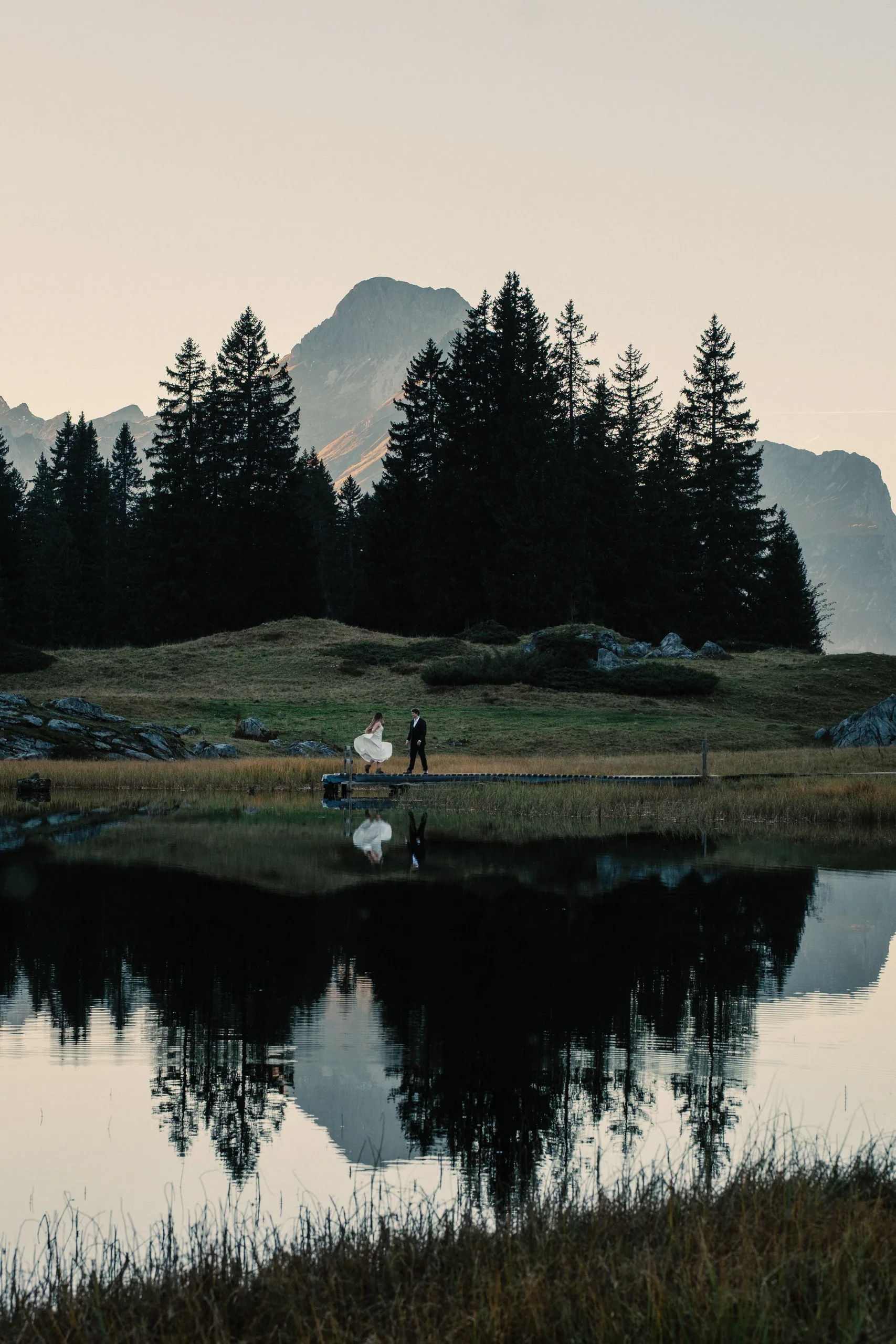
Don’t start with a list of famous spots. Start with how you want the day to feel, then match a region to it.
Ask yourselves four questions. Do you want to hike to your ceremony, or step out of a car into it? Does privacy matter more than a famous view? Are you drawn to sea, mountains, or forests and old stone? And do you run warm or cold? Your answers will rule out half the continent for you, in a good way.
Be honest with yourselves here, and later with your photographer. If steep drop-offs scare you, or a two-hour hike sounds like a chore, say so. The best spot on the map is worthless if one of you spends the ceremony fighting vertigo. Pick somewhere you’ll enjoy being.
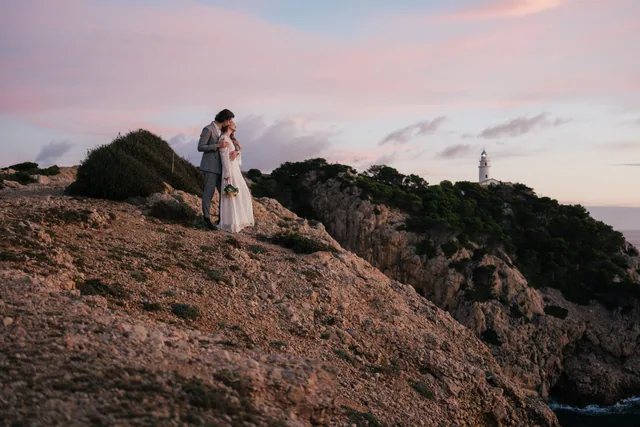
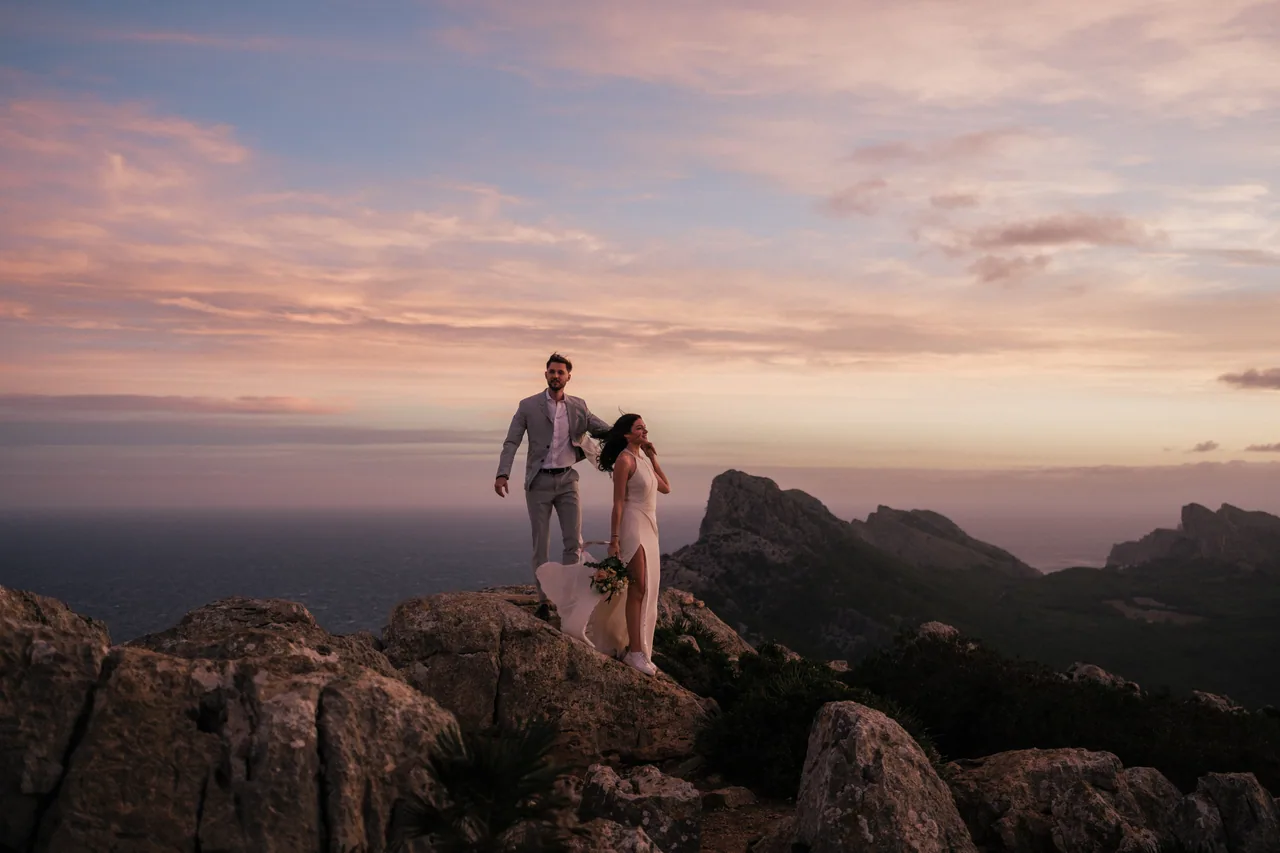
Mediterranean coast and mountains. Warm light, sea cliffs, olive groves and old towns. Mallorca is my signature region. The Tramuntana ridgelines, quiet coves and hill villages all sit within a short drive of each other. I’ve photographed real elopements across the island, from ridge ceremonies to finca dinners. It also works almost year-round, which gives you far more freedom with dates.
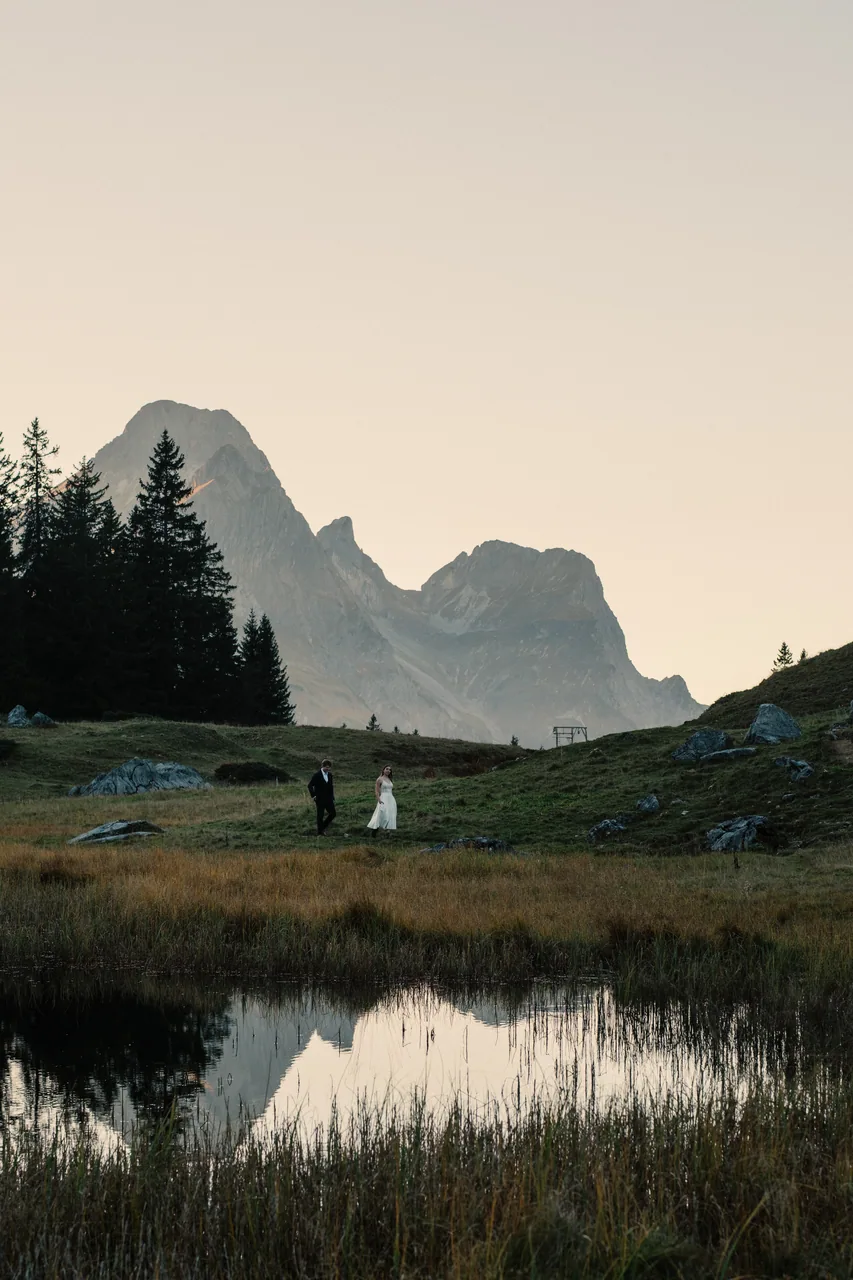
The Alps. Peaks, mountain lakes and waterfalls, with serious drama in every season. The Austrian Alps are my quiet tip: rarely the first name on elopement lists, with easy access, empty trails and scale that humbles you all the same. Lakes, waterfalls and high meadows sit close together here, which means three different worlds inside a single day.
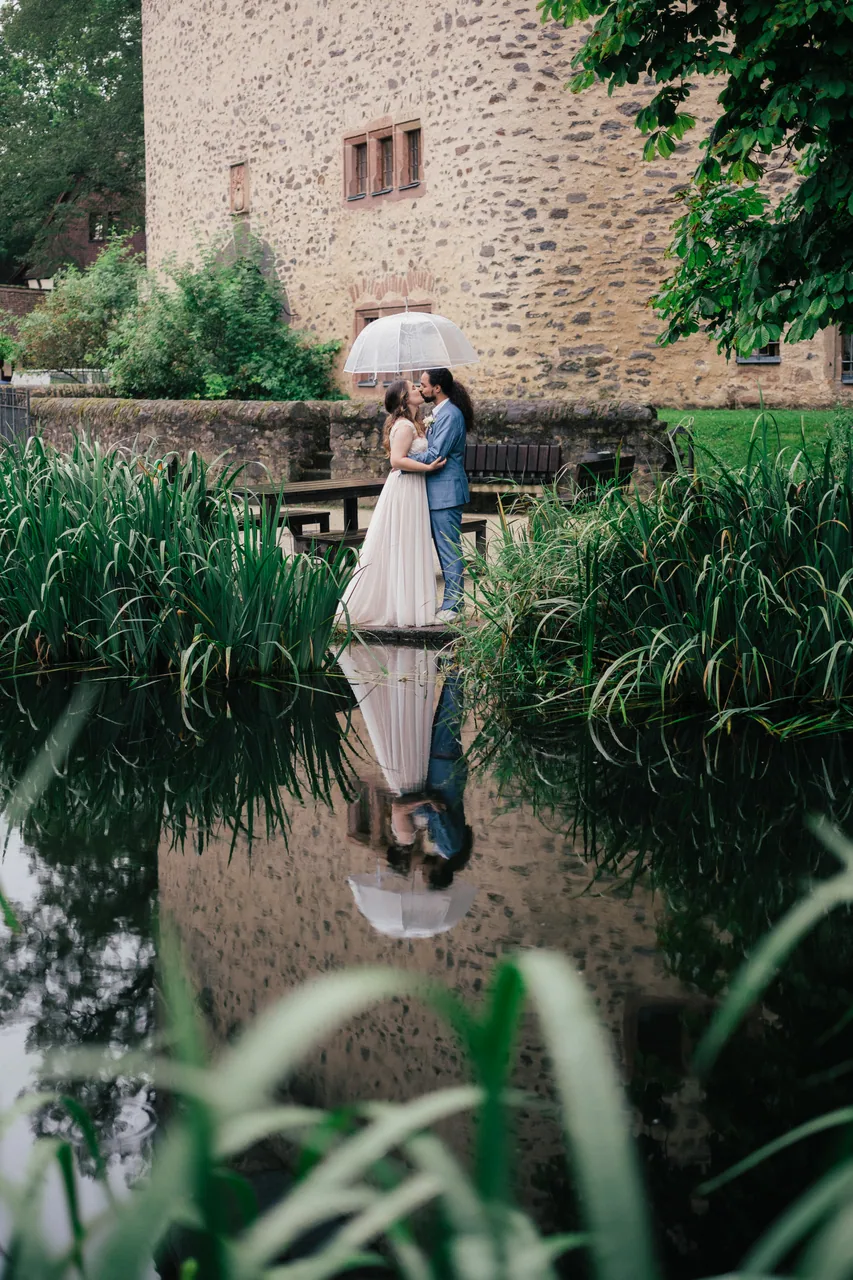
Forests, rivers and castles. Germany is underrated for eloping. Castle backdrops, misty woods and quiet river valleys, plus simple logistics if you’re combining the trip with city travel. I live here and have photographed weddings in these landscapes for years. If your families are travelling with you, it’s also one of the easiest places for them to reach.
And wherever on the map you land, the method doesn’t change. Fifteen-plus years of landscape and travel photography across 20+ countries means I read a new place fast: light, access, weather, the quiet corners. Dolomites, Tuscany, an Atlantic coastline: the skill travels, because light and weather follow the same rules wherever you stand.
Step 2: Decide between a legal and a symbolic ceremony
This decision shapes your paperwork, your timeline and sometimes your location. So settle it early.
A legal ceremony abroad means getting officially married in your destination country. It’s doable, but most European countries ask non-residents for a stack of admin. Think translated documents, apostilles, registry appointments, and in some places waiting periods. Rules vary by country and change often, so always check the official sources for your destination before you commit.
If you want the legal route abroad anyway, Denmark is the well-known exception. Rules for foreigners are clear, paperwork is modest and lead times are short, which is why so many international couples marry there. Wherever you marry as a visitor, check how the marriage gets recognised back home; your registry office can usually answer that in minutes.
A symbolic ceremony means you handle the legal part at home, at your local registry office. Then you hold your real ceremony in the landscape you chose, with no paperwork following you abroad. You can marry on a ridge at sunrise without a single form.
And no, it doesn’t make the day less real. You still write vows, exchange rings, and say them out loud to each other. A celebrant is optional; so are witnesses. Many couples choose this route, and I’ve yet to meet one who regretted it.
Countries like Italy, Spain, Portugal and Greece are popular partly because symbolic ceremonies make them simple. The full breakdown, including when a legal ceremony abroad is worth the effort, is in my guide to legal vs symbolic elopement ceremonies in Europe.
Step 3: Pick your season
Europe changes character four times a year, and so do crowds and costs.
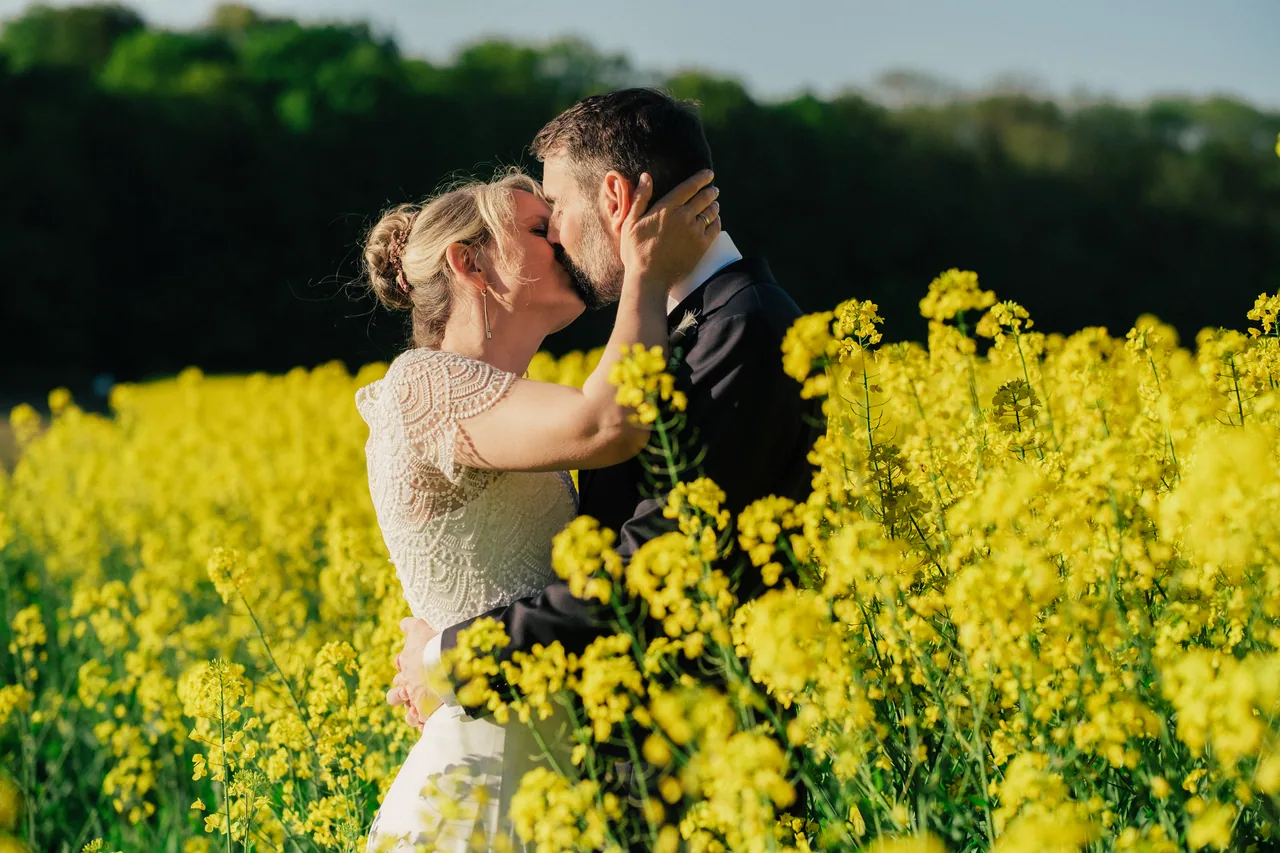
Spring (April to June). Wildflowers in the mountains, mild coastal weather, manageable crowds. One of the best windows for Mallorca and southern Europe. Higher alpine trails may still hold snow into June.
Summer (July to September). The only reliable window for high alpine routes, since passes and trails open late. The trade-off is peak tourism and heat in the south. Early starts solve most of it: a sunrise ceremony beats the crowds and the heat in one move.
Autumn (October to November). Golden forests, soft light, thinning crowds. Germany and the Alps are at their moodiest and best. The sea stays warm enough in Mallorca well into October.
Winter (December to March). Snow, empty landscapes and real privacy, if you’re flexible about weather and access. Not for everyone. Spectacular for the right couple.
One more thing about light, since it shapes everything I do. The further north you go, the longer golden hour stretches; the further south, the harsher midday becomes. Region and season are really one decision, so make them together.
Step 4: Set a realistic budget
Most guides go vague here, so let me be concrete instead, with one honest caveat first. An elopement costs as much or as little as the day you want. A village ceremony and a sunset cliff stay lean; a helicopter to a ridge no road reaches doesn’t. Both are right.
My photography packages start at €3,600 in Central Europe, which covers Austria, Germany and their neighbours. Southern Europe, including Mallorca, Spain and Italy, starts at €3,900. Northern & Atlantic Europe starts at €4,600. Travel is always included, and these are starting points: the exact quote depends on the coverage your day needs, which we settle after a quick call. Details are on the pricing page.
The other line items most couples meet:
- Flights: €200–€800 for two, from within Europe; more from overseas.
- Stay: two to four nights somewhere good, €400–€1,200.
- Outfits: whatever feels right, commonly €500–€2,500 combined.
- Celebrant: optional, roughly €300–€600.
- Flowers, hair and makeup: €300–€800.
- A proper dinner: €100–€300 for the two of you.
Add it up for your own version of the day. A simple shoulder-season elopement can stay around €6,000 to €7,000 all in; a multi-day production with video and a helicopter can pass €20,000, and both are exactly right for someone. You’re not paying for a hundred dinners and a dance floor. You’re paying for a place, a day and the photographs that outlast both.
For the full line-item breakdown, see how much it costs to elope in Europe.
A place, a day, and photographs that outlast both.
Step 5: Build your timeline around light
A traditional wedding runs on a venue schedule. Your elopement runs on light.
The best light comes early and late. Sunrise gives you privacy and still air. The last two hours of sun give you warmth and colour. Build your ceremony into one of those windows, then let the middle of the day stay slow, like the best day of a good holiday. Breakfast, a drive, a swim, a nap. Nobody ever wished their wedding day had more appointments in it.
One full-day shape I often suggest:
- 13:00 — Slow start. Getting ready, unhurried, somewhere with good window light.
- 15:30 — First look, then a wander through an old town or along a quiet trail.
- 18:00 — Drive or walk up to your ceremony spot while the light softens.
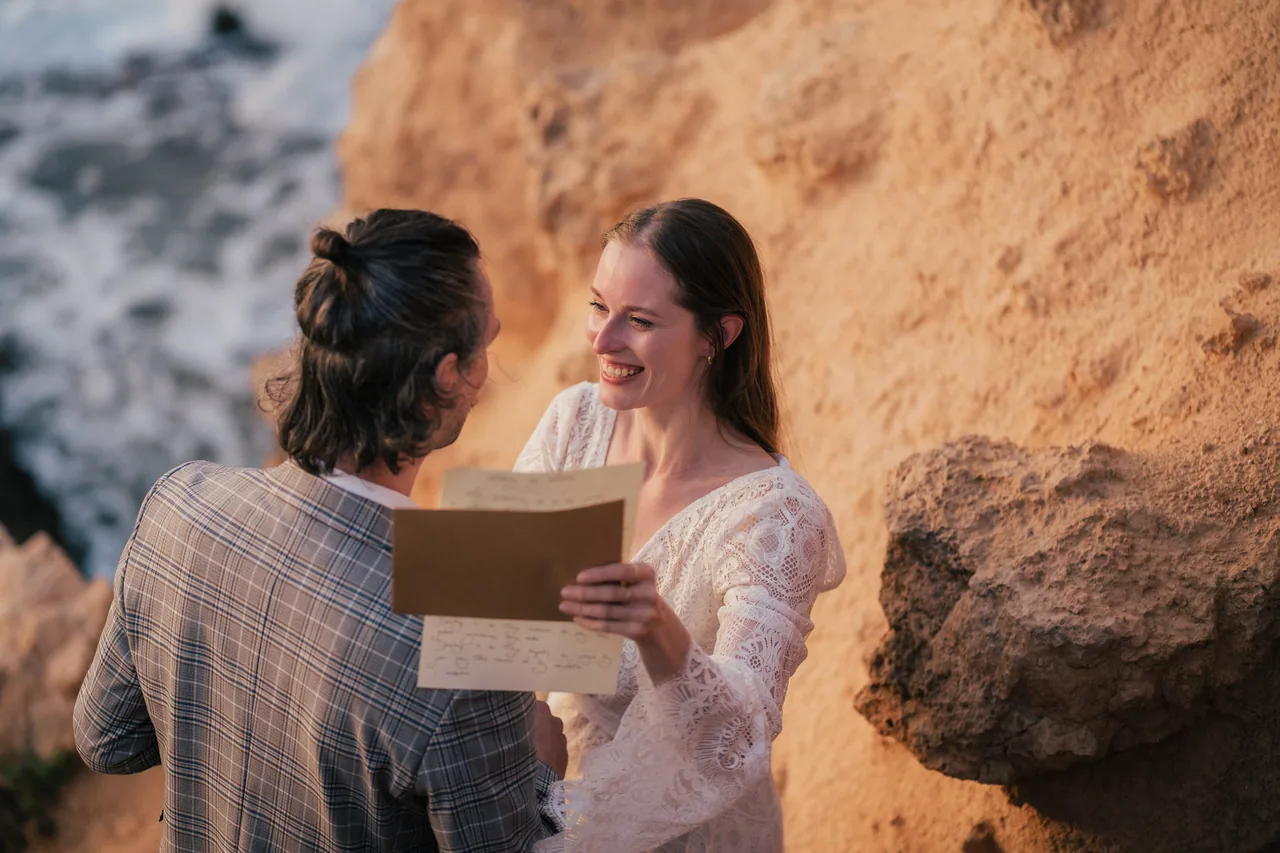
- 19:00 — Ceremony in the last warm hour. Vows, rings, time to let it land.
- 20:30 — Something cold to drink and a picnic at the viewpoint.
- 21:30 — Blue-hour photos if you’re up for it, then dinner.
A half-day version simply trims the front. There’s no single right shape, and we figure out the flow together, around your place and your pace.
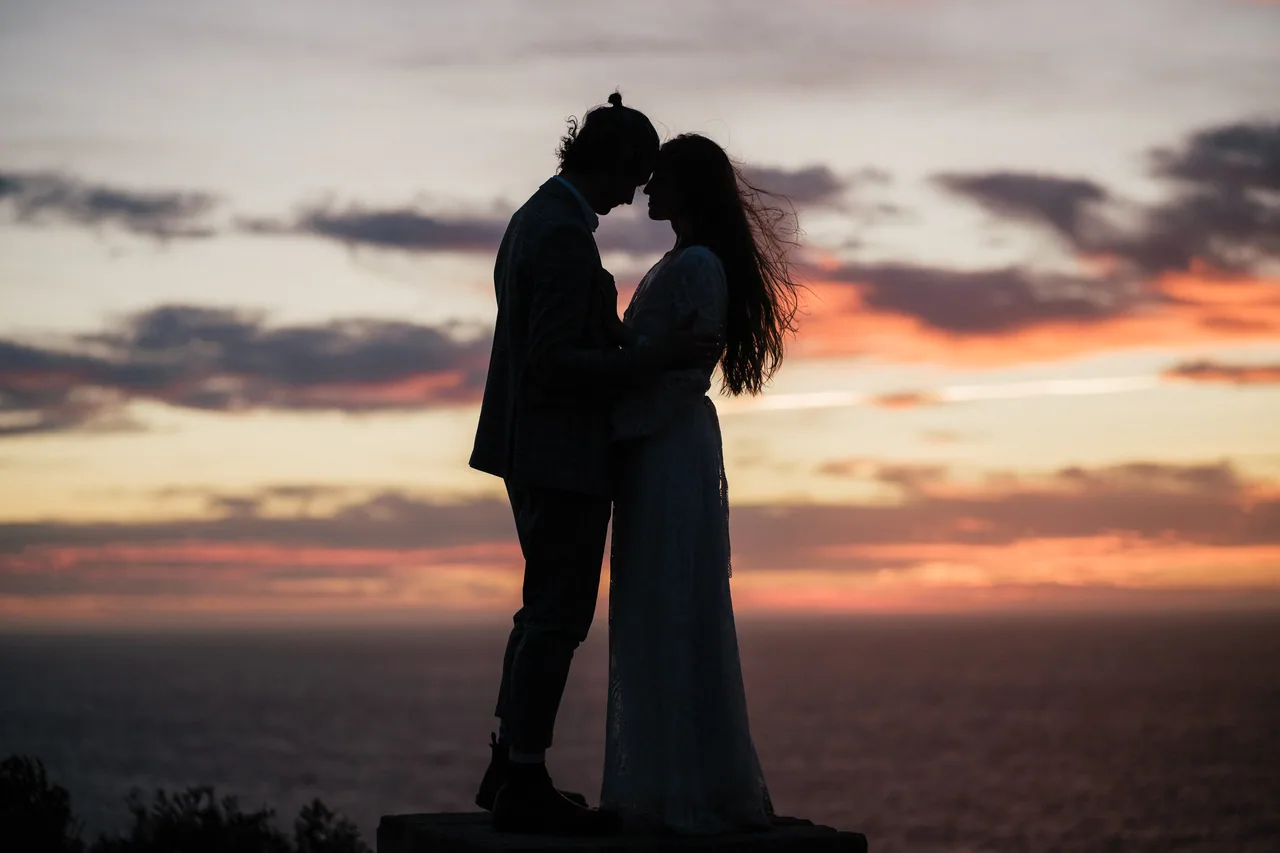
Step 6: Sort travel, permits and a weather plan B
Three practical things separate a smooth elopement from a stressful one, and none of them are glamorous.
Arrive early. Give yourselves at least two or three days in the country before the ceremony. You’ll shake off the travel, see your location in person, and stop relying on photos and maps. Alpine roads and island drives almost always take longer than the map says.
Rent a car for remote spots. Europe’s trains are excellent between cities, and worth using for that leg. But ceremony locations in the mountains or on the coast usually mean early starts before public transport runs. A small rental car buys you freedom to chase the light, or to flee a rain cloud.
Check permits. Some national parks and protected sites require a permit or a small fee for ceremonies, even tiny ones. It’s usually quick to arrange once you know it exists. Your photographer should flag this for your specific spot, and I always do. The same care applies to the place itself: stay on the paths, pack out what you bring, and leave it as you found it.
Have a plan B you actually like. Weather in the mountains and on the Atlantic coast changes fast. We pick a backup location and a flexible window in advance. A grey forecast then becomes a change of scene rather than a crisis. Mist and soft rain often photograph beautifully, especially on film.
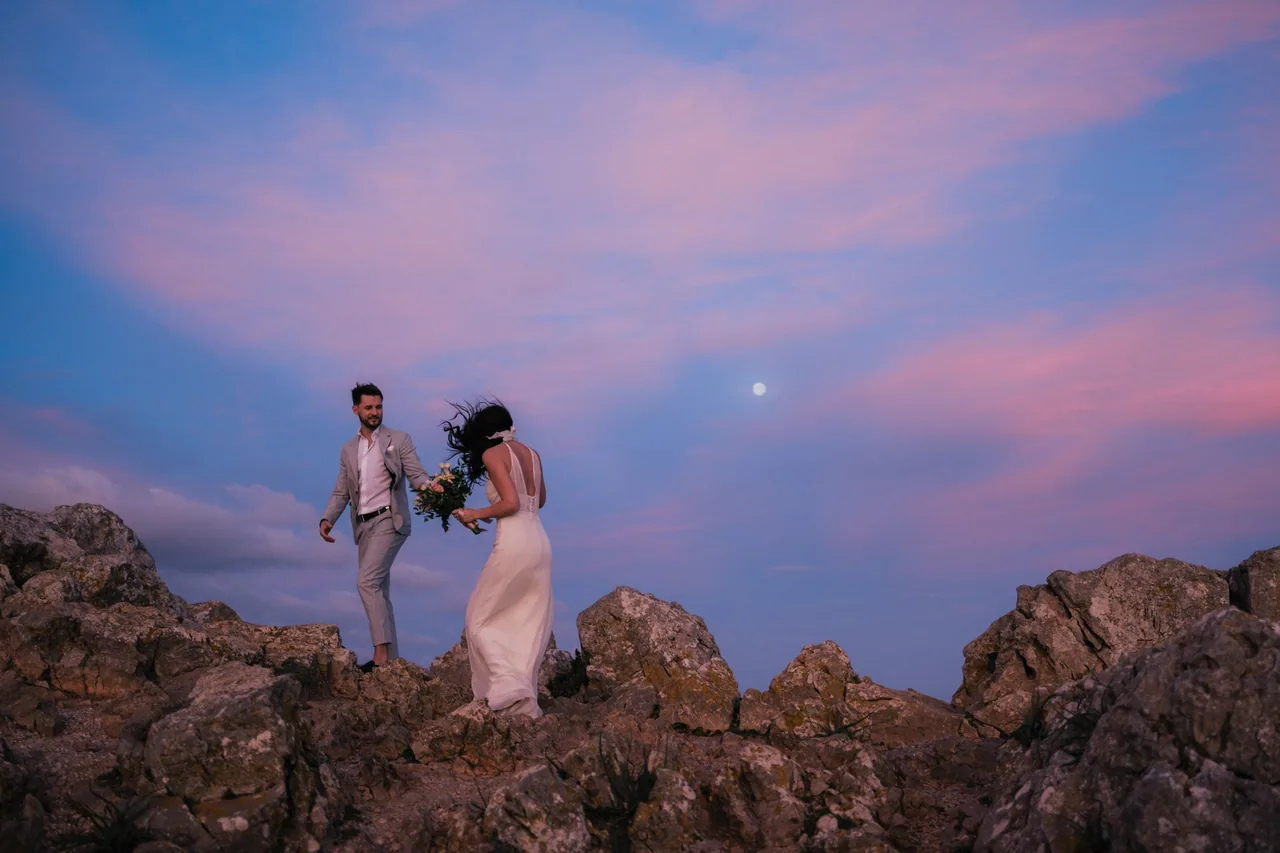
Step 7: Choose your photographer
For most elopements, your photographer is the one vendor who’s with you all day. Choose accordingly.
Look for three things. First, someone who knows the terrain, reads light and weather, and helps you plan rather than just showing up. Second, a style you’d still hang on your wall in ten years. Mine is built on analog film photography alongside digital: natural colour, soft grain, nothing over-edited. Third, someone you’d happily spend a full day with. The photos relax when you do.
Before you book anyone, ask them these questions. How do you prepare for a location: scouting, light, backup spots? How do you handle bad weather on the day? And how much help can we expect before the wedding itself? The answers tell you more than any highlight reel.
If you want to know who’s behind this guide, here’s a bit about me. The short version: 15+ years of landscape and travel photography across 20+ countries. All of it now works for couples who’d rather stand in a landscape than on a stage.
Five mistakes I see couples make
After years of planning days like this, the same few missteps come up again and again. All of them are avoidable.
Choosing a spot from one famous photo. That viewpoint looks empty online because someone shot it at 5 a.m. By mid-morning it can hold fifty tripods. Always ask what a place is like at your planned hour, in your planned month.
Planning a midday ceremony. Harsh overhead light, the biggest crowds, the hottest hour. Shift two hours either way and the whole day improves.
Staying too far from the location. A bargain stay an hour’s drive away costs you the best light twice a day. Book close, even if it’s simpler than you’d planned.
Skipping the permit check. A ranger interrupting your vows is a bad surprise. Five minutes of checking, or one question to your photographer, prevents it.
Overpacking the schedule. The couples who look back happiest gave the day room. Several locations can work beautifully, but keep them close together and leave real gaps in between.
None of these should scare you. They’re exactly the kind of thing that disappears when one person on your team has done this before.
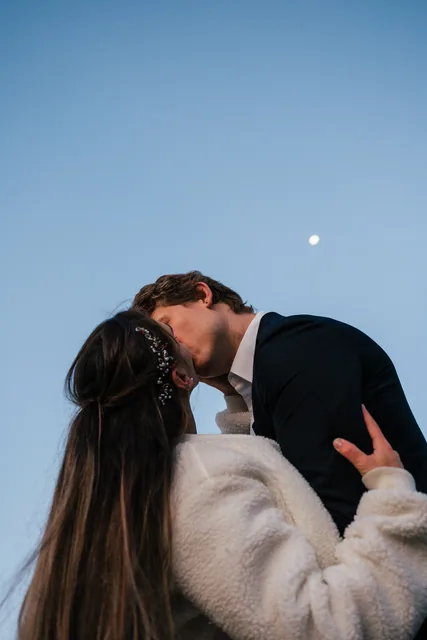
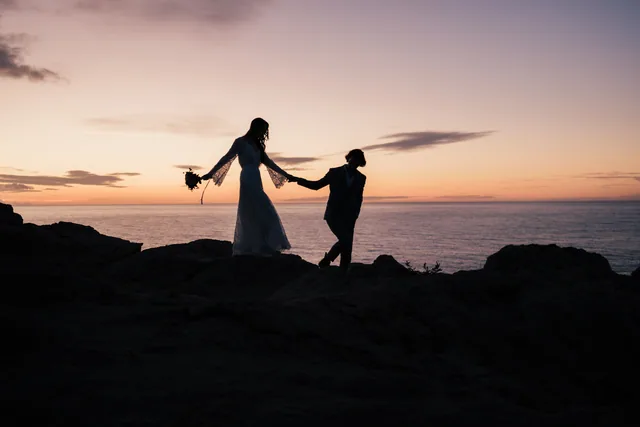
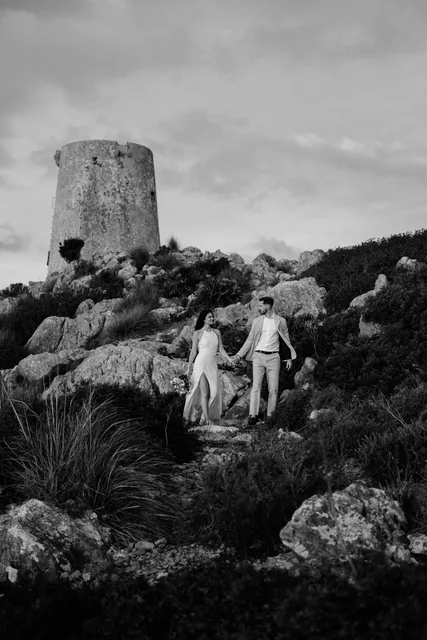
Start with one decision
You don’t need the whole plan today. Pick the landscape that pulls at you, and the rest follows in order: ceremony type, season, budget, timeline. None of it is complicated once that first decision is made.
If you’d like help working out where your day belongs, tell me what you’re dreaming up. No pressure, no scripts.
Frequently asked questions
01 What are the easiest countries in Europe to elope in?
For symbolic ceremonies, almost anywhere works, which is why Italy, Spain, Portugal and Greece are so popular. For legal ceremonies, requirements vary widely by country. Check official sources early, or simply marry at home first.
02 Can you elope in Europe right away?
A symbolic ceremony can happen as soon as you can travel, since the legal part happens at home on your own schedule. A legal ceremony abroad usually needs weeks to months of lead time for documents.
03 Is eloping cheaper than a traditional wedding?
It can be, often substantially, but it doesn't have to be. An elopement detaches cost from guest count, so the budget follows the day you want: a village-and-sunset day stays lean, a multi-day mountain production with a helicopter doesn't. Both are valid.
04 How far in advance should we plan a Europe elopement?
Six to twelve months is comfortable. That secures your preferred photographer and accommodation, and leaves time for paperwork if you want a legal ceremony abroad. Shorter is possible, especially off-season.
05 What are the downsides of eloping?
Some family may be disappointed not to be there, and you give up some big-wedding traditions. Many couples solve both with a relaxed celebration at home afterwards. The trade is a day that belongs to the two of you.